Play
Clawhammer
Banjo

In a nutshell_
Tailored lessons
Patient and relaxed
Authentic and solid
Years playing_
2014-present
Location_
Sydney, Australia
Banjo teaching_
I’ll get you playing. And if you already play, I’ll help you move forwards. We’ll work together on left and right hand techniques, building good foundations with a cool tune each session and tailored exercises to take away and consolidate in your own time. Along the way we’ll explore banjo history and the cultural traditions that underpin and energise this remarkable instrument.
Banjo playing_
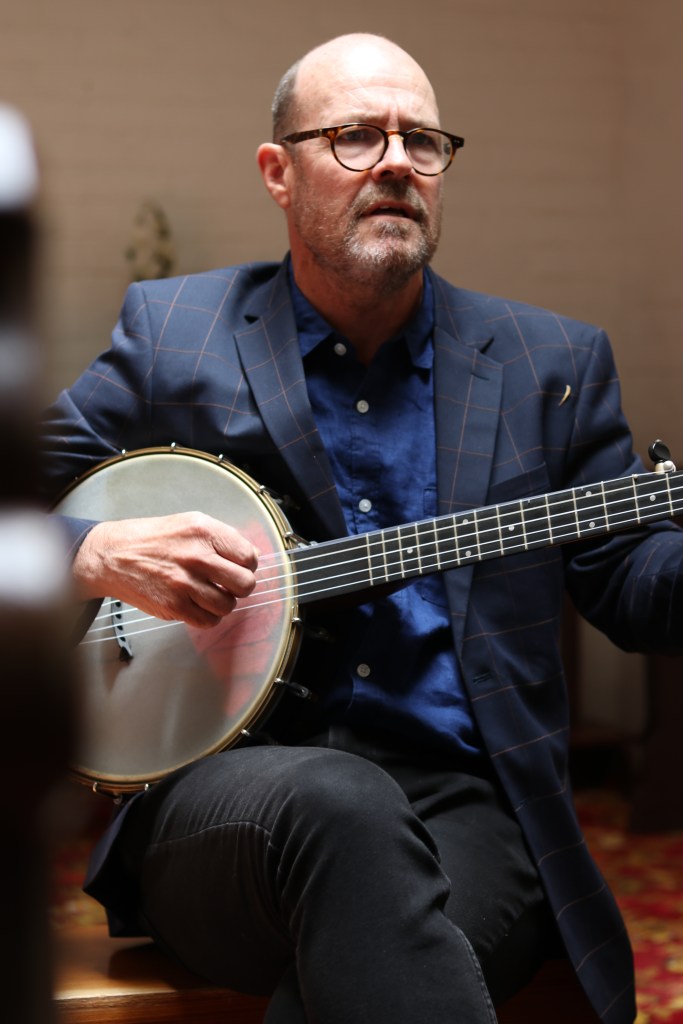
I play clawhammer banjo in a distinctively clean, uncluttered and melodic style. When playing solo or with a fiddle, I prefer to champion the melody with clear notes, working closely with the accompaniment. In a group jam I’m more devil may care, focusing on rhythm and percussion, letting all those discordant notes and brushing strokes colour the overall sound. My own repertoire combines traditional American, English and Irish tunes with rarities from the Australian colonies, plus a growing bunch of original songs. My aim, as teacher, player and performer, is to honour the banjo’s extraordinary history, legacy and ongoing journey across continents, cultures and communities.
Quick links_
How do you want to learn?
I teach clawhammer banjo in-person or online, on a one-to-one basis or in group sessions from time to time. I also conduct clawhammer workshops and bootcamps at festivals for beginners and advanced players. Send me an enquiry form or get in touch by phone or email.
Single session
one hour
$80
One hour session, covering general technique, tailored to your playing ability and aspirations. Work on a tune, overcome hurdles or just bed down some of the basics.
Zoom session
one hour
$60
My high quality Zoom set up ensures the best sound and vision, with one-off or a semester of lessons ($300) meeting your needs and interests.
Semester
six sessions
$420
This six session program will include a bunch of tunes, a variety of tricks and techniques, left and right hand exercises and get you and your banjo jam ready.
Group workshop
three hour
$50
From time to time I’ll run group sessions with a small number of participants. In addition to honing skills and learning new tricks, you’ll get a chance to work on playing with others. Includes a lunch break.
Lesson times
I give lessons on Mondays, Tuesdays and Wednesdays, mostly in the daytime. I’m happy to discuss other times. Standard lessons run for one hour.

Lesson times are shown in colour.
Feedback
Steve, 2025_
Gary, I enjoyed lessons with you. I’ve experienced a number of banjo and guitar teachers over the years. You are a great teacher!
Lisa, 2024_
Our weekly Zoom catch ups were so easy and fun. Thanks for your patience and encouragement Gary.
Tallulah, 2024_
The semester of lessons was just what I needed to push me along. I love all the tunes and can’t stop playing them.
Watch this_
Gary Crockett (banjo) with the Sydney band Good Tom Wallace play the classic tune ‘Say Darling Say’, along with Jane Wallace (microbass and vocals) and Mischa Vickas (guitar and vocals).
About me
Working life_
History curator
Teacher/carer
Writer/film maker
Musician
Comforts_
Sailor
Surfer
Motorcyclist
Traveller
About_
I’m a Sydney-based musician with a background in the arts, heritage and disability sectors. For three decades I worked as a history curator in a large cultural organisation based in Sydney. This involved creating exhibitions, writing and producing digital content, managing historic sites and collections and delving deeply into Sydney’s social and architectural history.
I’m now teaching banjo and nurturing musical projects, while supporting NDIS clients on the HireUp platform. My aim is to concentrate on meaningful activities that bring me joy. This includes playing my banjo and jamming with anyone who’ll join me, riding my motorcycle, sailing my old yacht and surfing up and down the coast when I can manage it.
Archive
Along with my banjo playing and teaching, I dabble in a variety of creative pursuits. These include making videos and performing around Sydney and regional folk and old time festivals.